Skip to content
HomePortfolioPostCompositionPhotos
한국어
System Blog logoSunhong'sSystem Blog
HomePortfolioPost
Hobby
CompositionSongs I wrotePhotosPhotos I took
KOEN
Today
한국어로 보기
Contents
  • Project 23
    • Hardware Project 12
      • Building an Arduino Auto Fire Extinguisher: Flame, Smoke, Heat Sensing + IoT
      • Radix-8 Booth Multiplier: Encoding Table and TDM Trade-offs (Verilog)
      • Radix-4 Booth Multiplier: Partial Product Reduction with TDM (Verilog)
      • Cortex-M0 SoC Design: A Multifunction Robot Control System on AHB-Lite
      • Differential Amplifier Design: 60 dB from a Mirror-Biased Two-Stage Amp
      • Designing a Verilog Slot Machine: LFSR Random Numbers and a Timer Seed (Basys3)
      • Wallace Tree Multiplier in Verilog: 8-Bit Parallel Multiply with Adders
      • A 5-Stage Pipelined RISC-V Processor in Verilog: Hazards and Forwarding
      • An 8-Bit Breadboard Computer Built from 74LS Chips: How a CPU Works
      • Zynq-7000 FPGA AI Accelerator: CNN/FC Cores and AXI CDMA Data Movement
      • Building a Raspberry Pi IoT Vending Machine: Firebase Stock and Theft Alerts
      • Kogge-Stone Adder in Verilog: Fewer Logic Levels with Higher-Valency Cells
    • AI Project 3
      • Federated Learning in Distributed Settings: Comparing FedProx and SCAFFOLD
      • Node Classification on a Knowledge Graph: Analyzing NELL with a GCN
      • Implementing Deep RL Algorithms: Comparing DQN, Double DQN, and PER
    • Web & App Project 4
      • Building a Lab Website: An Academic Site on WordPress
      • Building a Personal Tech Blog: A Full-Stack Web Application on Django
      • Android Restaurant Picker with Kakao Map and Naver Search APIs (Kotlin)
      • Building a GitHub Pages + Jekyll Blog: From Repository to Auto-Deploy
    • Other Project 4
      • Building a Guessing Game System Based on Human-Robot Interaction
      • Designing a Rectilinear Steiner Tree Algorithm for VLSI Routing
      • DC Motor Position Controller: Meeting Settling Time with PID and Root Locus
      • Power Generation and Transmission Planning: Objectives and Constraints
  • AI Note 2
    • Neural Network Basics: From the Perceptron to Multilayer Networks
    • Backpropagation: Gradients via the Chain Rule and MNIST in NumPy
  • Hardware Note 26
    • SoC Note 8
      • ARM Cortex-M0 Architecture: Register Set, Operating Modes, Memory Map
      • SoC Design Frameworks and the Design Productivity Gap
      • SoC Programming in C: Controlling Memory-Mapped I/O Registers
      • Classifying the ARM Thumb Instruction Set: Data Processing Instructions
      • AMBA 3 AHB-Lite Bus Architecture: Signals and Transaction Behavior
      • Processor vs. Core: Instruction Stages and Layers of Abstraction
      • Comparing Chip Design Methodologies: Full-Custom, Standard-Cell, PLD
      • Cortex-M NVIC Interrupt Handling: Vector Table and Exception Priority
    • Embedded Note 7
      • Intro to ARM Embedded Systems: ARM vs. Thumb Instruction Sets
      • Inside the ARM Processor: The 3-Stage Pipeline and Instruction Execution
      • Raspberry Pi Hardware: The Cache Hierarchy and ARM vs x86
      • Intro to Raspberry Pi Hardware Hacking: GPIO, UART, I2C, and SPI
      • Inside the ARM Cortex-M3: Harvard Architecture, Registers, and xPSR
      • ARM Assembly Basics: Instruction Format and Arithmetic/Logic Operations
      • ARM Architecture and Registers: Banked Registers by Processor Mode
    • Microprocessor Note 5
      • Crossbar Bus Architecture: From Shared Bus to Full Matrix
      • AMBA APB Protocol: Signals and Read/Write Transfer Timing
      • Digital Adder Design: Half/Full Adders and Ripple Carry Adder Delay
      • How CMOS Transistors Work: From the PN Junction to nMOS/pMOS
      • Datapath Functional Units: Barrel Shifters, Comparators, Multipliers
    • Computer Architecture Note 6
      • Computer Architecture Basics: ISA, Abstraction Layers, and Performance
      • How Virtual Memory Works: Paging and Virtual-to-Physical Translation
      • Memory Hierarchy and Caches: The Memory Wall and Four Cache Design Questions
      • Pipelining and Hazards: Analyzing the 5-Stage MIPS Pipeline
      • Multiprocessors and Shared-Memory Sync: Critical Sections, Producer-Consumer
      • Storage and I/O System Architecture: I/O Buses and Reliability (MTTF)
  • Digital Design 22
    • RISC-V 22
      • RISC-V Overview: The Spec, ISA Names, and What Extensions Do to Code
      • RV32I 1: Registers, Six Instruction Formats, and Why Immediates Are Scrambled
      • RV32I 2: Integer Ops, Compares, Shifts, and Building Constants with lui/auipc
      • RV32I 3: Branches, Jumps, Loads/Stores and Alignment, FENCE, ECALL/EBREAK
      • RV64I: W Instructions, Sign-Extension Rules, and What Differs from 32-Bit
      • Assembly and the ABI: Registers, Calling Convention, Stack Frames, ELF
      • The M Extension: Multiply, Divide, and the Rules for Divide-by-Zero and Overflow
      • The A Extension: LR/SC, AMOs, and aq/rl
      • The Memory Model: RVWMO, What FENCE Means, and Ztso
      • F and D Extensions: FP Registers, Rounding, fcsr Flags, NaN Boxing
      • The C Extension: Compressed Formats and Their 32-bit Equivalents
      • Small Extensions: Zicsr, Zifencei, Zicntr·Zihpm, B (Zba·Zbb·Zbs), Zicond, Zicbom
      • V Extension 1: VLEN, SEW, LMUL, vsetvli, and Vector-Length-Agnostic Code
      • V Extension 2: Masks, Load/Store Types, Reductions, Permutes, Tail/Mask Agnostic
      • RISC-V Decoder Design: Decode Tables, Formats, and Illegal Instructions
      • The Immediate Generator and a RISC-V Single-Cycle Datapath
      • RISC-V 5-Stage Pipeline: Forwarding and Stall Conditions, Handling x0
      • RISC-V Branches and Jumps: Resolve Stage, JAL/JALR, Return-Address Stack Hints
      • Implementing the M Extension: Multiply/Divide Units and Divide-by-Zero
      • Implementing the A Extension: Reservations, Where AMOs Run, aq/rl, FENCE
      • C Extension: Decompressor, 16-Bit Fetch, and Misaligned 32-Bit Instructions
      • FENCE.I and Self-Modifying Code: What the Instruction Side Must Honor
Double-click to collapseCtrl[
Posts/Project/AI Project

AI Project

3 posts·AI/ML projects
AI Project · 3
NewestA-ZZ-APopular

: no matching posts.

Clear filters
AI Project
Jan 21, 2026

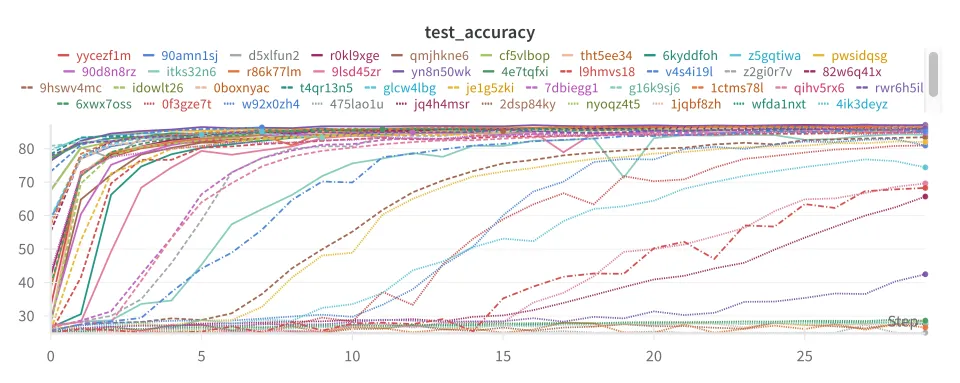
Federated Learning in Distributed Settings: Comparing FedProx and SCAFFOLD

I compared the performance of the FedProx and SCAFFOLD federated learning algorithms on non-IID data. Experiments used the AG News text classification dataset and a GRU model, and I analyzed each algorithm's convergence behavior.
AI Project
Jan 21, 2026

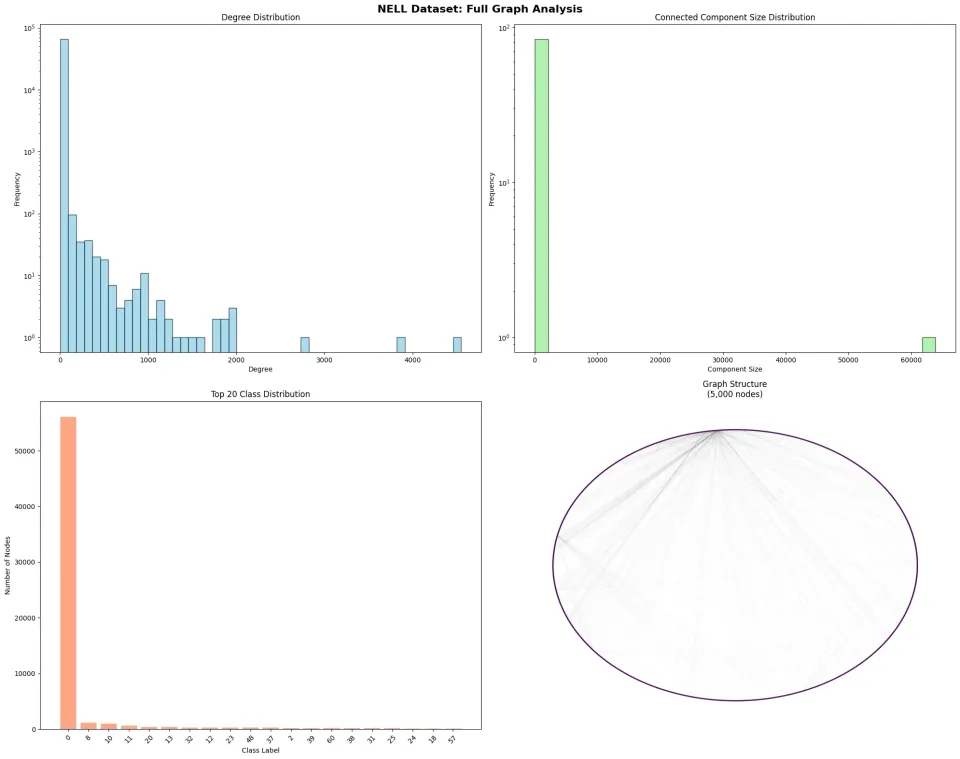
Node Classification on a Knowledge Graph: Analyzing NELL with a GCN

I performed node classification on the NELL knowledge graph dataset with a GCN (Graph Convolutional Network). I implemented the model in PyTorch Geometric and reached 97.86% test accuracy on 65,755 nodes and 186 classes.
AI Project
Jan 19, 2026

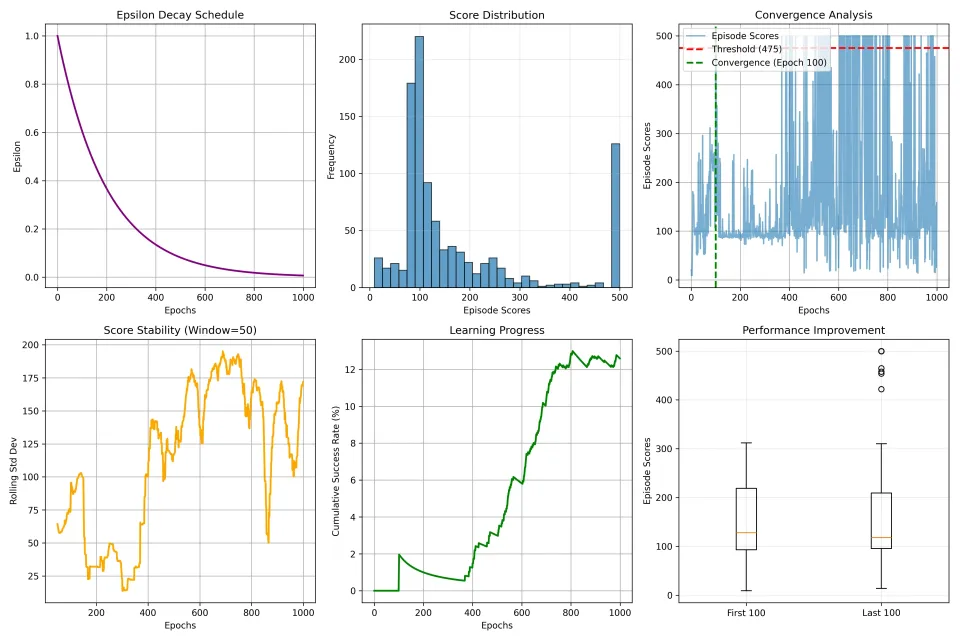
Implementing Deep RL Algorithms: Comparing DQN, Double DQN, and PER

Compares three reinforcement learning algorithms, DQN, Double DQN, and PER, in the CartPole, Acrobot, and MountainCar environments, and analyzes the characteristics and limits of each.

Sunhong's System Blog

AI · Hardware · Development

Read the postsPortfolio

Blog

HomePostPortfolio

Project

Hardware ProjectAI ProjectWeb & App ProjectOther Project

AI Note

Hardware Note

SoC NoteEmbedded NoteMicroprocessor NoteComputer Architecture Note

Digital Design

RISC-V

Hobby

CompositionPhotos

Site

AboutContactPrivacyRSSGitHubLinkedIn
System Blog© 2026 SunhongAstro · TypeScript · Cloudflare
Enlarged image