Chapter 1 Introduction: ARM and Embedded Systems Overview
An embedded system is a system whose hardware or software is optimized for a specific purpose and application. ARM is the best-known processor in embedded systems, characterized by low power consumption, small die size, and high performance.
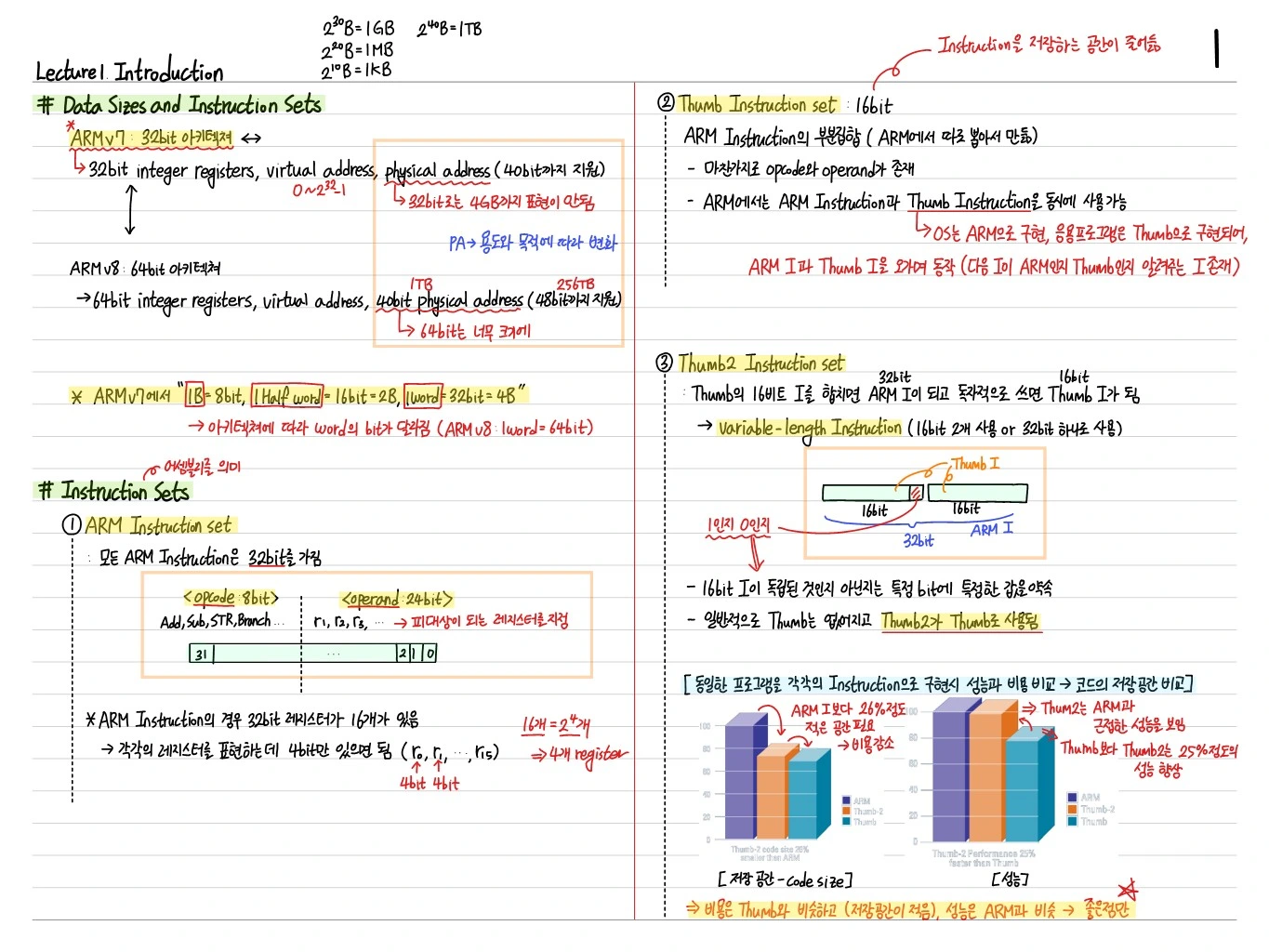
Data Sizes and Instruction Sets
ARM has supported a variety of data sizes and instruction sets across its generations.
- Before ARMv4: mostly 32-bit instructions
- ARMv4 and later: the Thumb instruction set was introduced
- Supports both the original 32-bit ARM instructions and the 16-bit Thumb instructions
- Defines design elements such as short physical registers, virtual addresses, and physical addresses
ARM and Thumb Instructions
- ARM instruction: 32-bit, the full instruction set. Uses short physical registers, virtual addresses, physical addresses, and so on
- Thumb instruction: 16-bit, a condensed version of ARM. Introduced to reduce code size, which helps in embedded environments with little memory
Instruction Sets
ARM Instruction Set
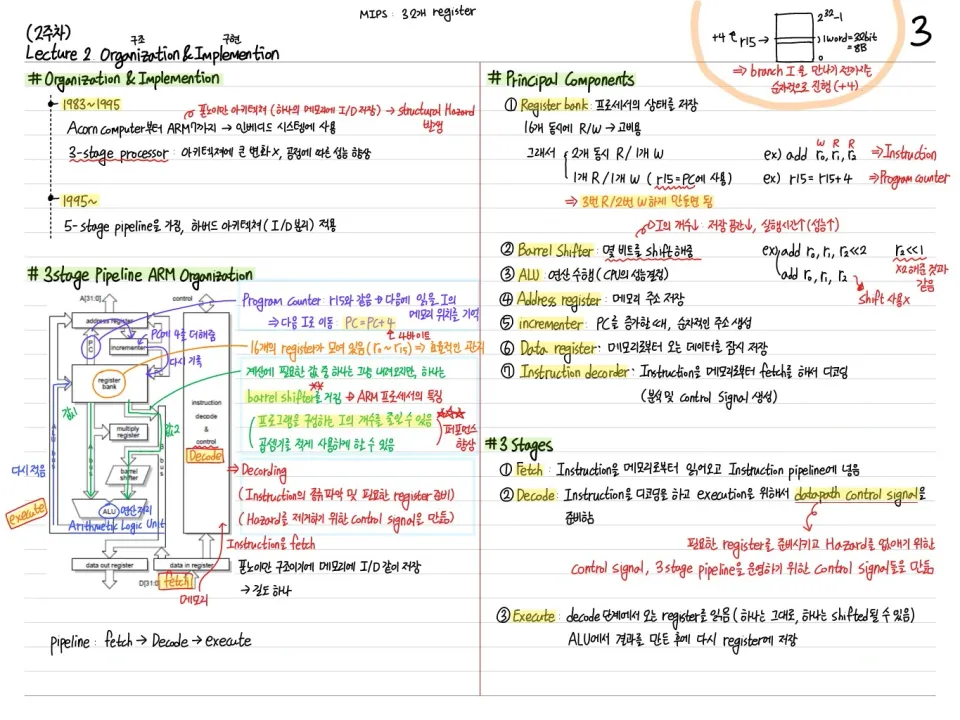
- 32-bit fixed-length instructions
- Each instruction can execute in the same amount of time (a RISC trait)
- The pipeline runs efficiently
Thumb Instruction Set
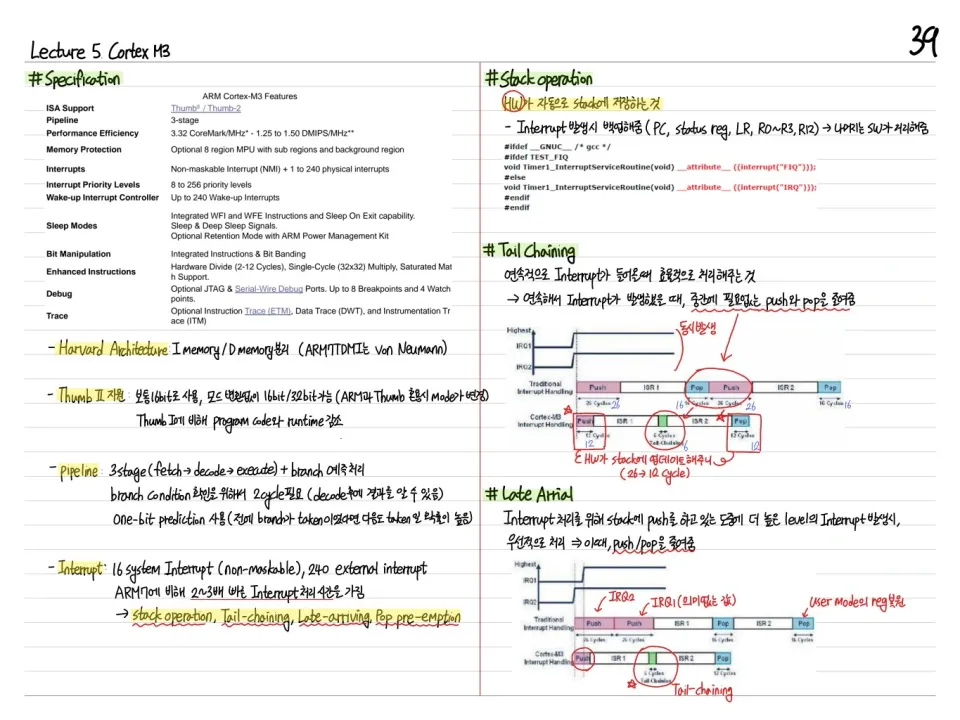
The Thumb instruction set compresses ARM's 32-bit instructions into 16 bits.
- Variable-length instructions: because they are 16-bit, they can be mixed with ARM instructions
- Code gets smaller, but some instructions need multiple cycles for complex operations
- With Thumb-2, ARM improved this by supporting both 16-bit and 32-bit Thumb instructions
Basic Characteristics
- Why Thumb instructions were added: embedded environments have small memory capacity, so code space has to be saved
- They are slightly slower than ARM instructions, but fewer memory accesses can improve overall performance
Summary
- ARM is the best-known processor in embedded systems (systems whose hardware or software is optimized for a specific purpose and application)
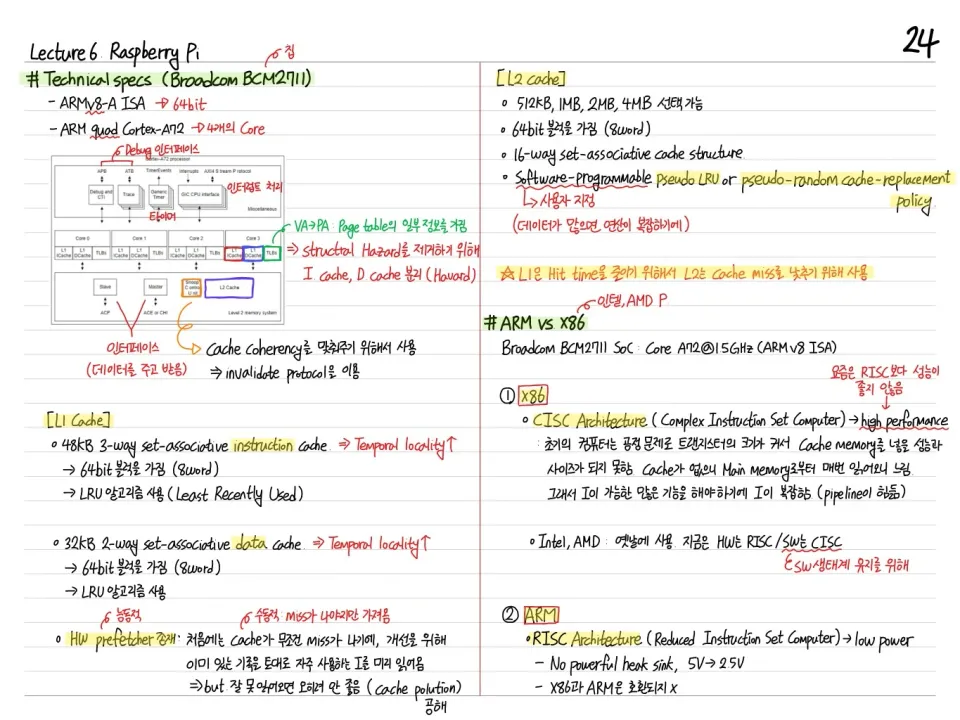
- ARM is becoming the face of RISC (small size, high performance) vs. Intel's CISC (small memory access, growth after caches, ↓ pipelining, complex instructions)
- RISC (Reduced Instruction Set Computer): simple, fast instructions
- CISC (Complex Instruction Set Computer): complex instructions, more clock cycles
- Pipelining is essential (the basic technique of RISC)
- Instructions can overlap and execute concurrently, at the risk of hazards
- Low power is essential (power vs. performance) → reducing leakage power through process development is important