Chapter 4, Section 2: PL Crossbar Bus Overview
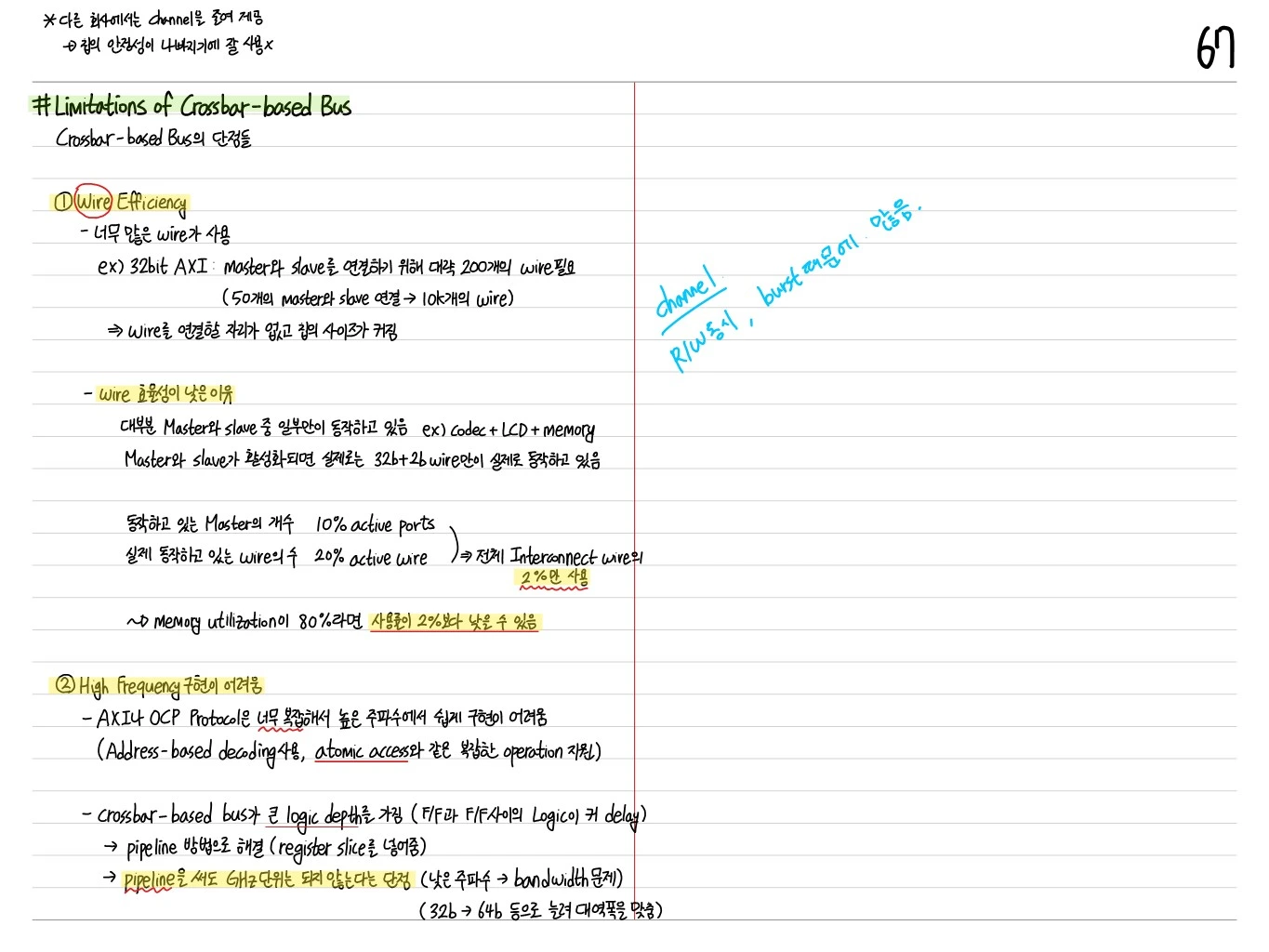
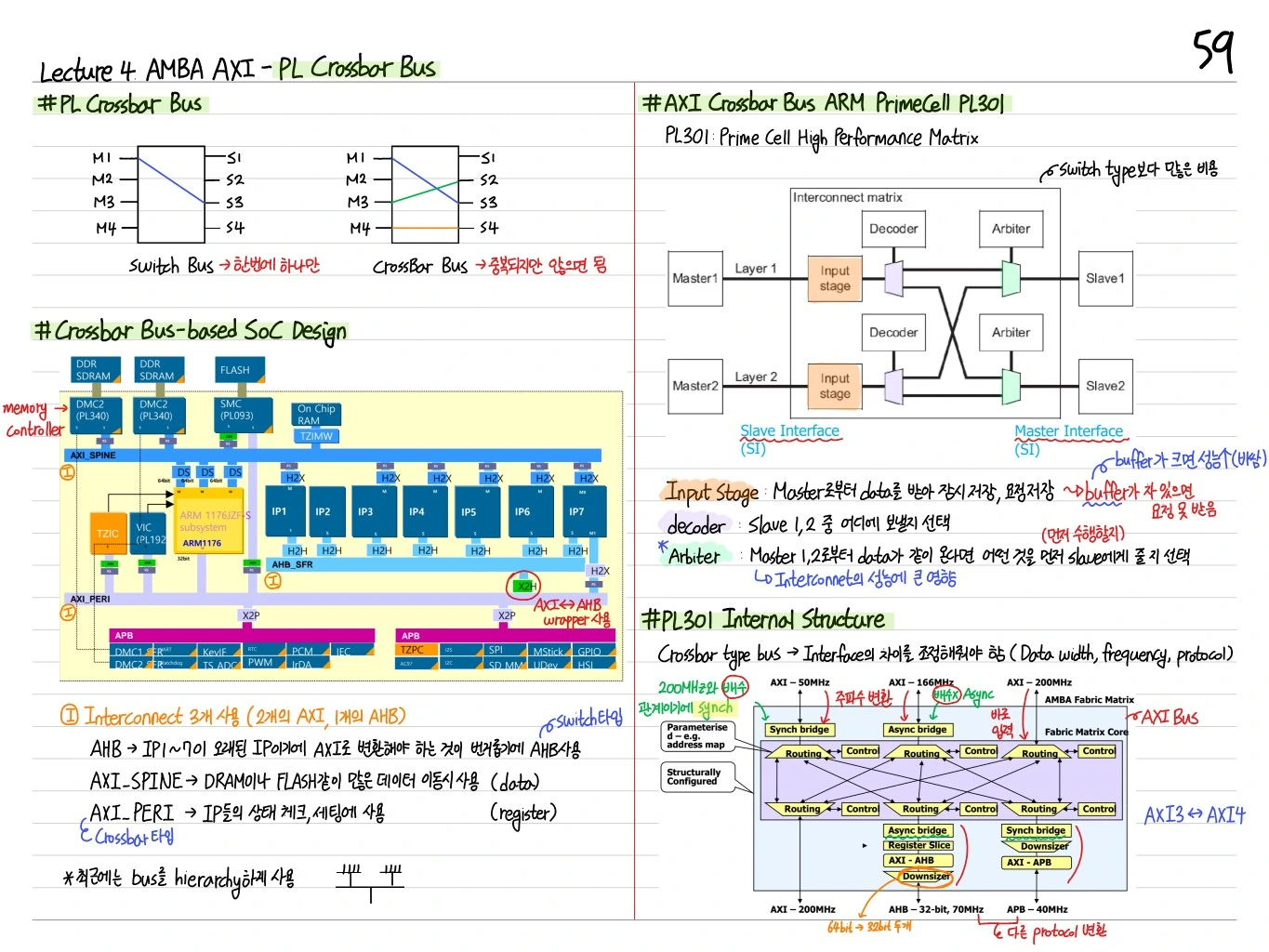
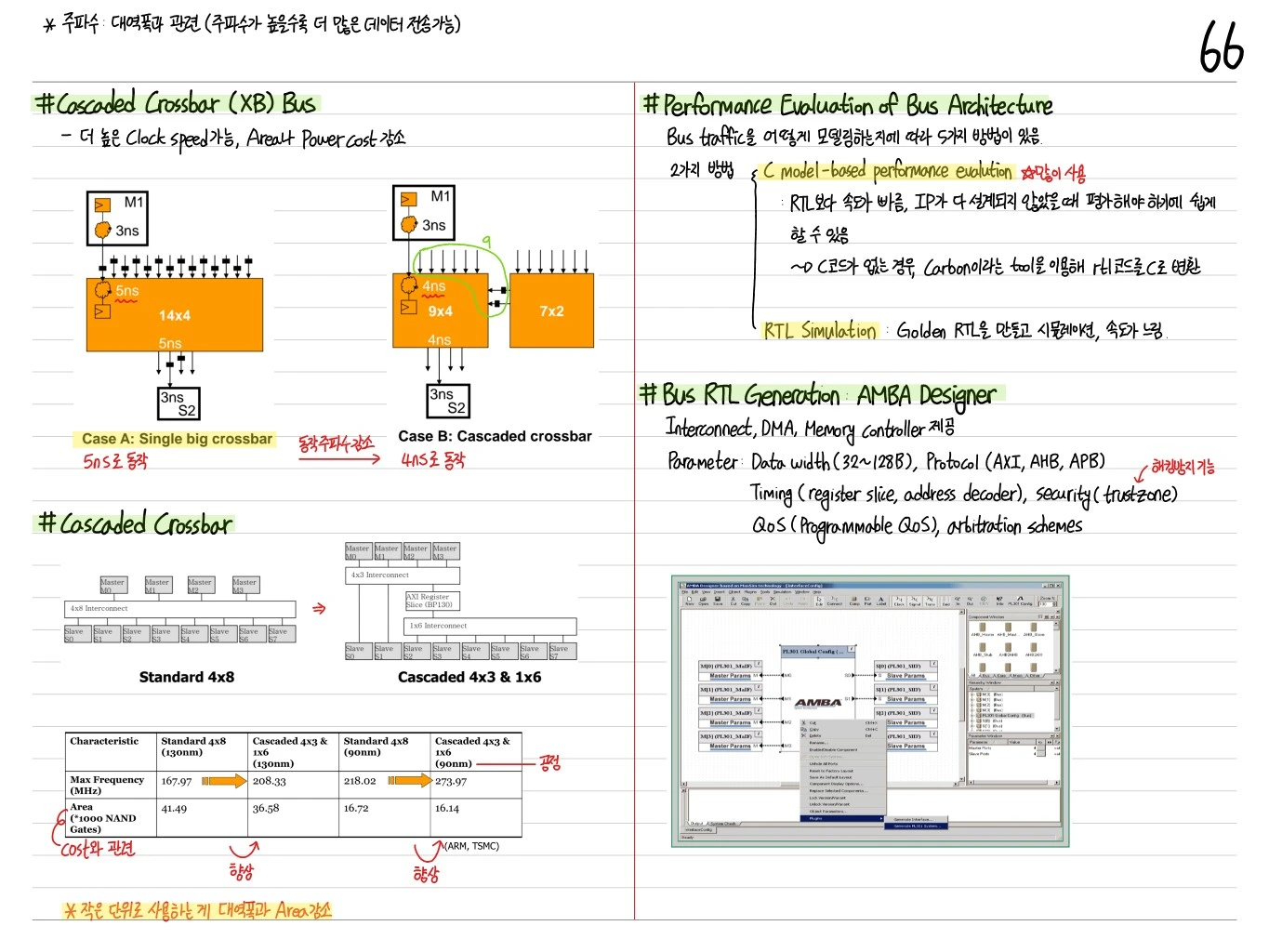
A crossbar bus is a high-performance interconnect that connects multiple masters to multiple slaves. It switches point-to-point connections dynamically, which enables multiple simultaneous transfers.
How Buses Evolved
Shared Bus
- All devices share a single bus
- Only one transfer at a time → bottleneck
- Simple to implement, low bandwidth
Hierarchical Bus
- Layered into a system bus → local bus
- The AMBA AHB + APB structure
Crossbar (Full Matrix)
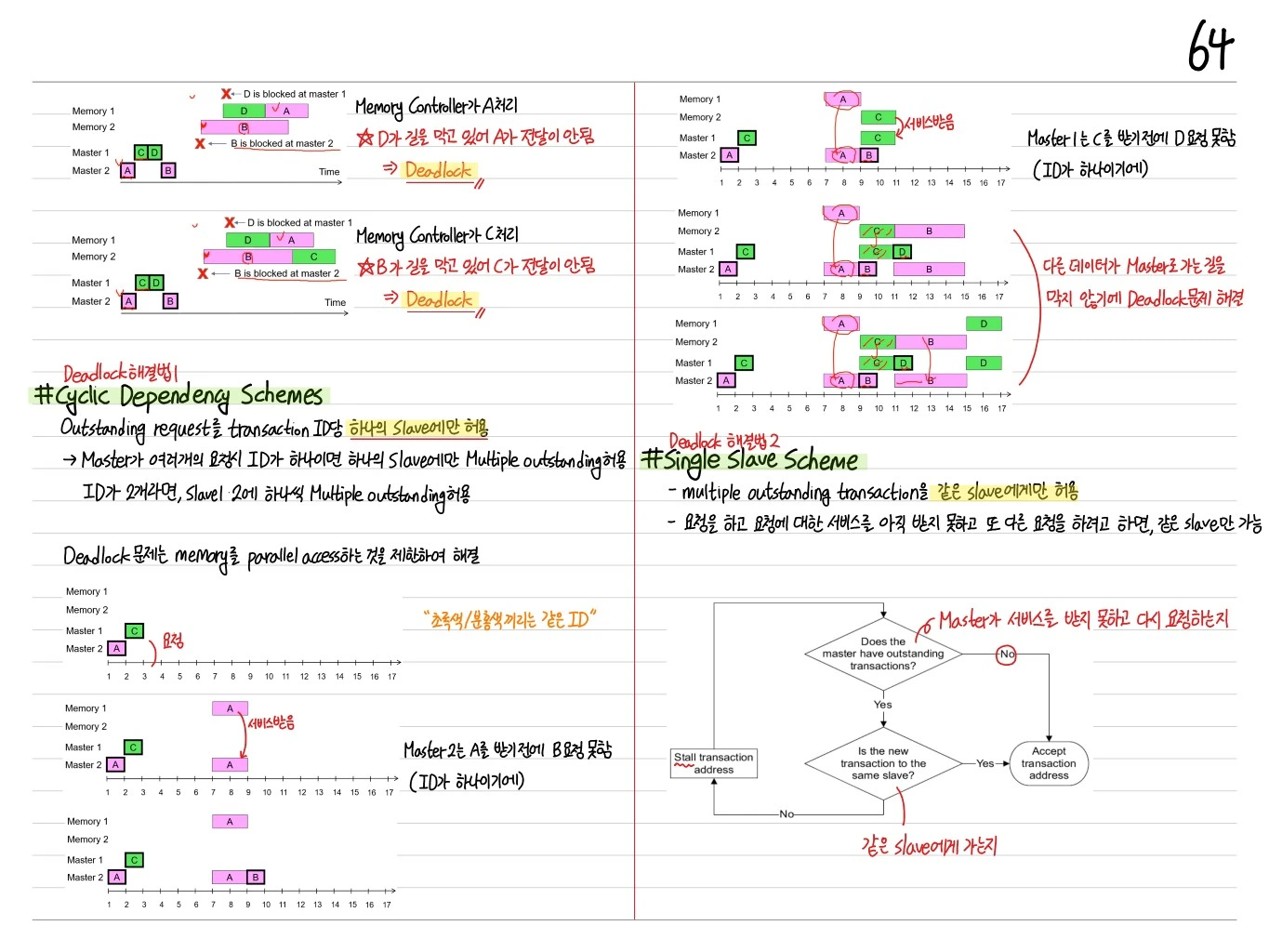
- M masters × N slaves → M×N switch matrix
- Every master can talk to a different slave at the same time
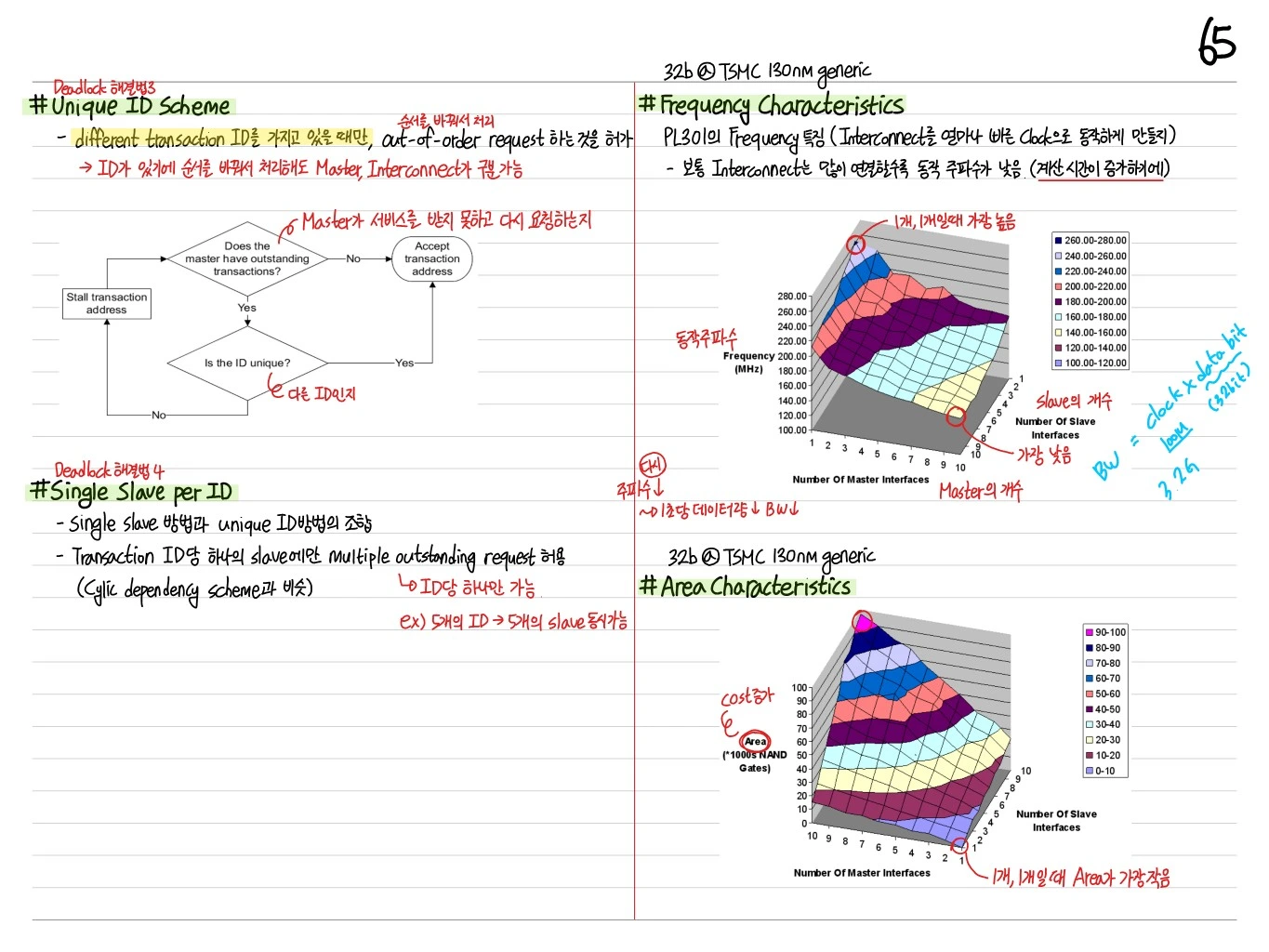
- Bandwidth ↑, area and complexity ↑
PL Crossbar Structure
PL (Programmable Logic) crossbar: the switch array is configured programmably.
- Master ports: CPU, DMA, GPU, etc.
- Slave ports: memory controller, peripherals, I/O
- A switch at each crosspoint → arbitration + routing
Arbitration
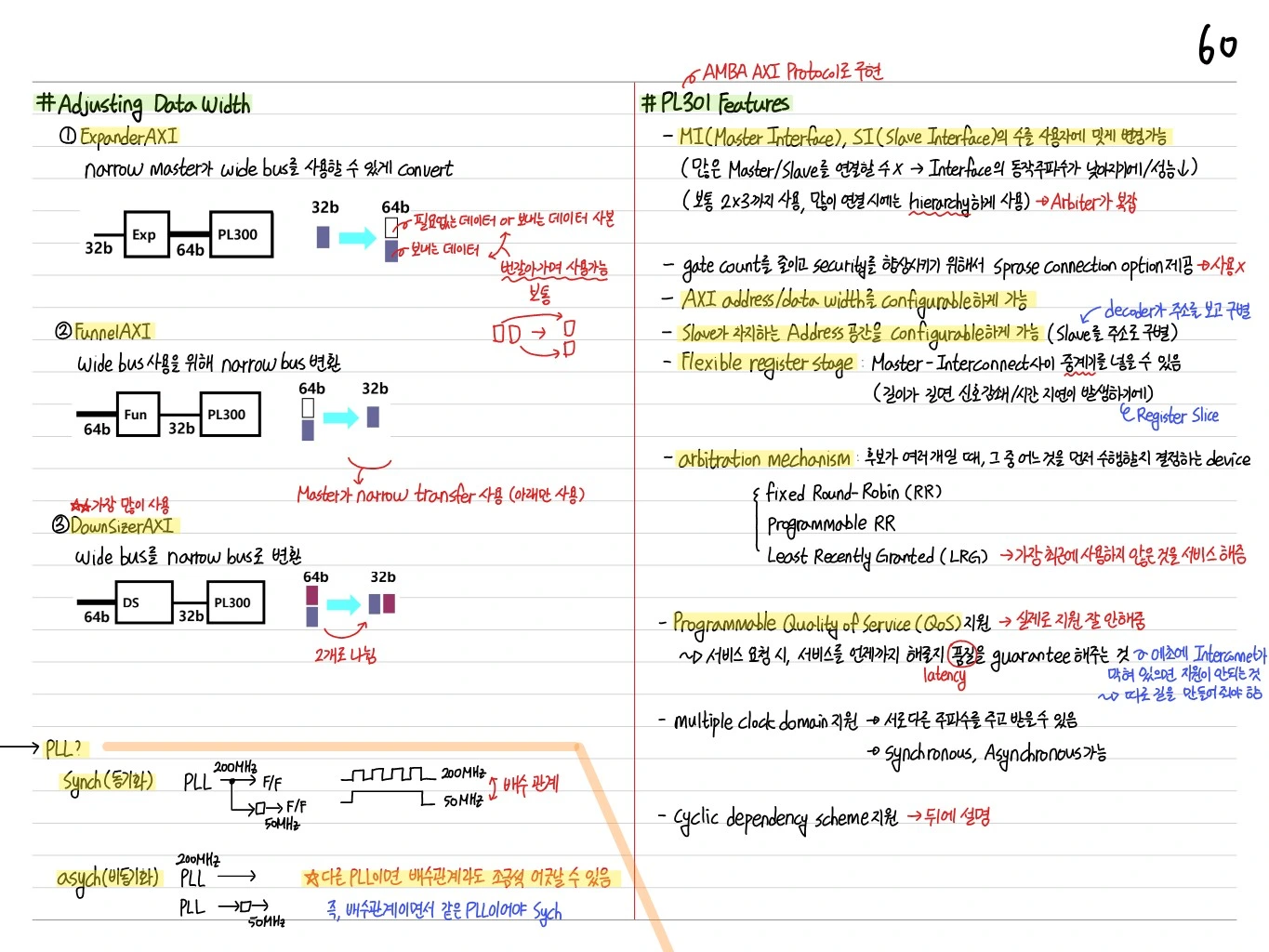
When several masters request the same slave, the arbiter picks one:
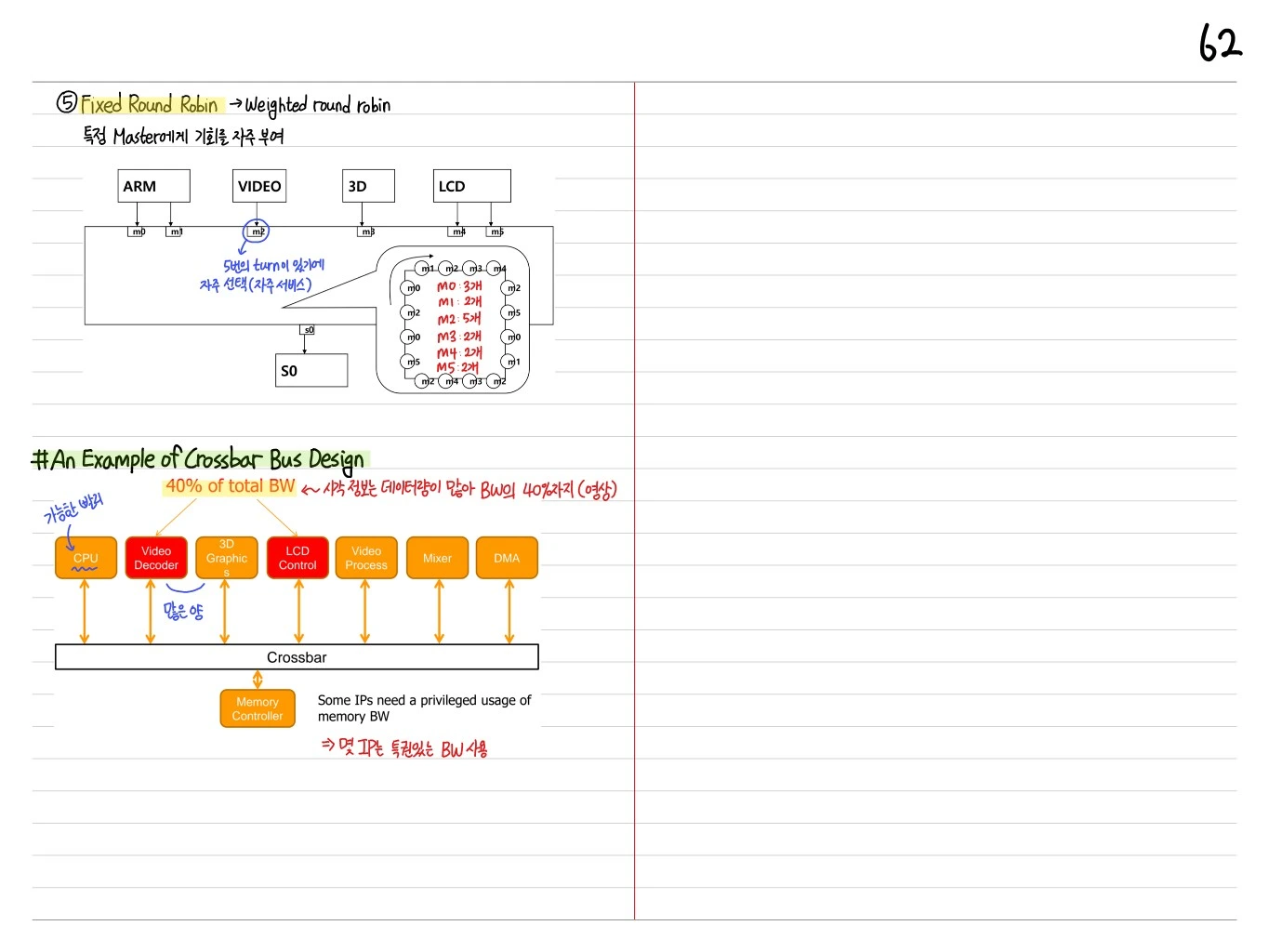
- Fixed priority: priorities are fixed
- Round-robin: fairness
- Weighted: by bandwidth share
- QoS (Quality of Service): real-time requirements
Pipelined Transaction
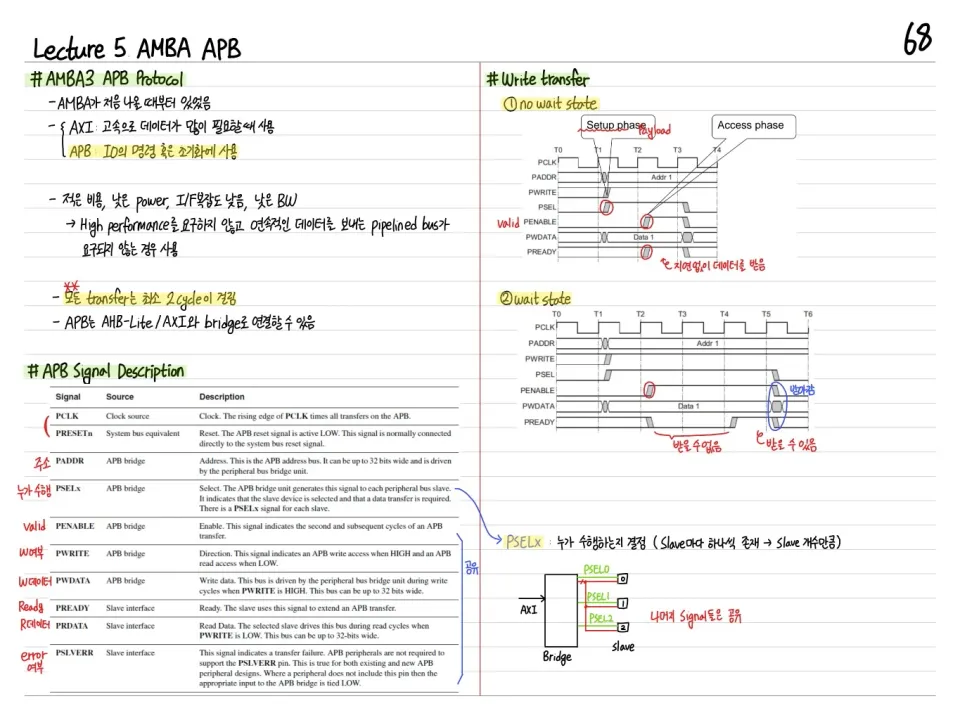
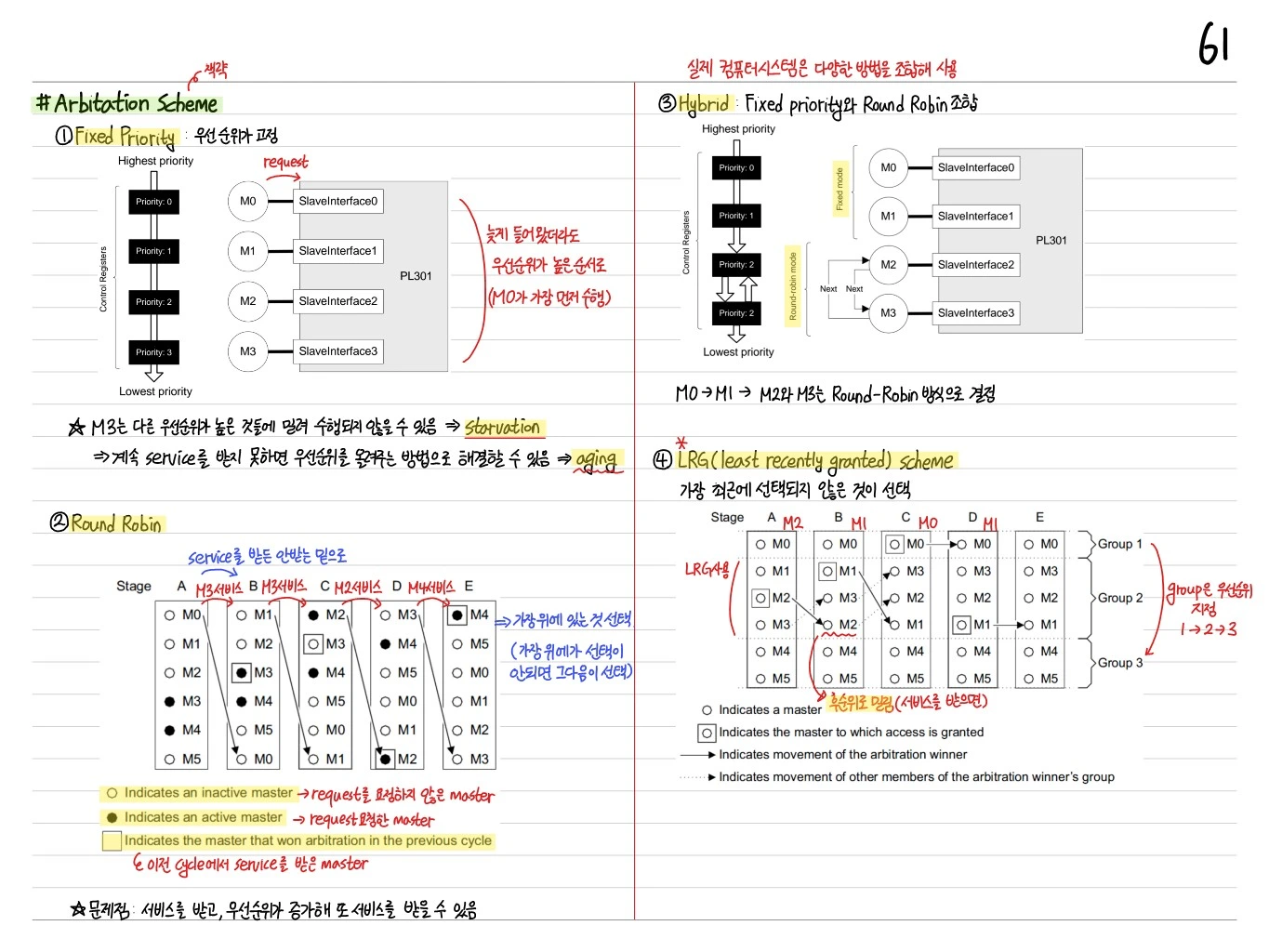
A bus transaction is split into an address phase and a data phase and pipelined:
- Address and data overlap → 2x throughput
- The basis of AMBA AHB and AXI
Burst Transfer
Several consecutive words are transferred with a single address phase:
- INCR4, INCR8, INCR16 (incrementing)
- WRAP4, WRAP8 (wrap-around, for cache line fills)
Essential for cache line fills.
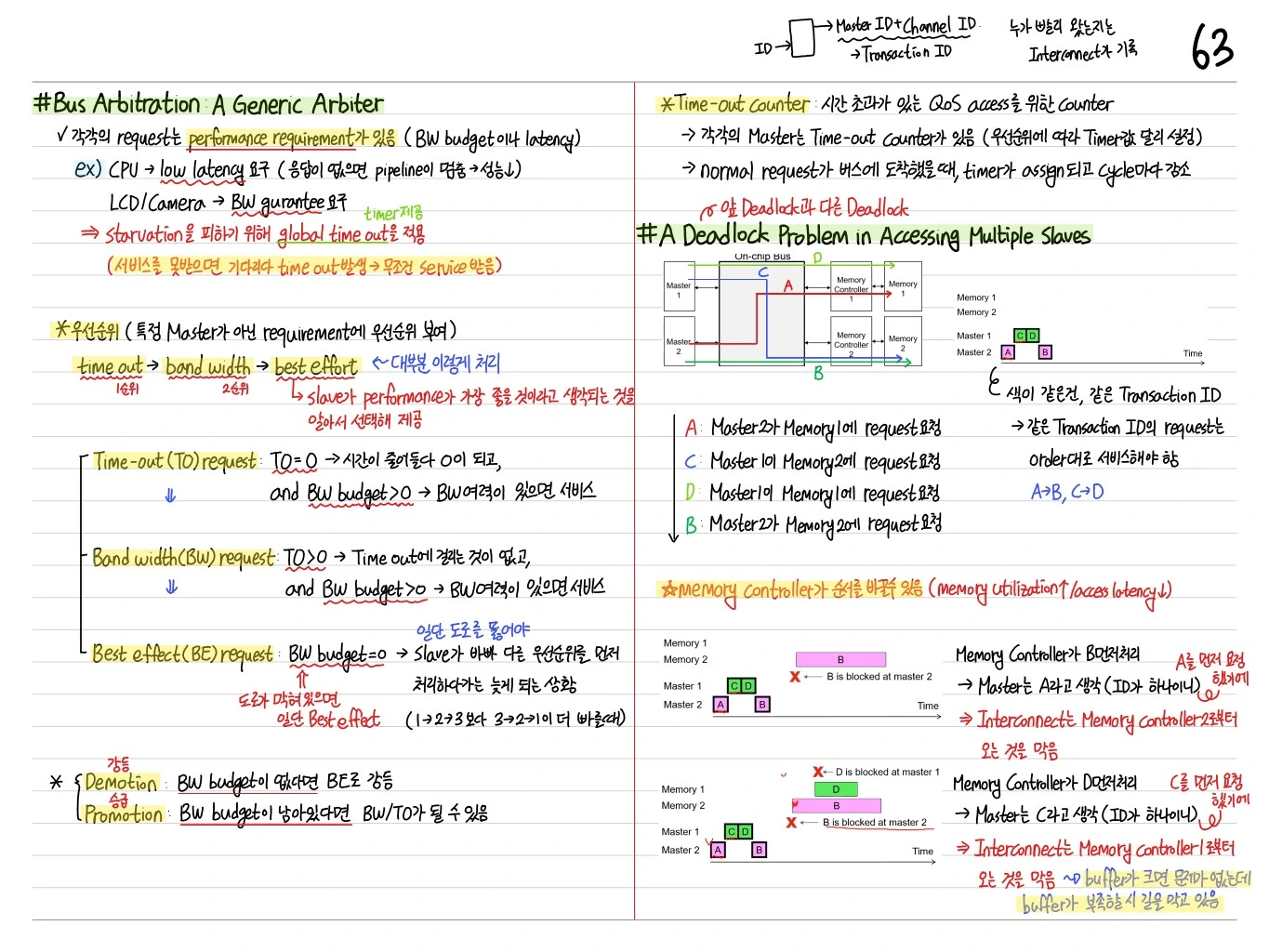
QoS (Quality of Service)
Latency guarantees for real-time systems (video, audio):
- Deadline-based scheduling
- Bandwidth reservation
- Priority queues
In AMBA AXI this is implemented with the AxQOS signals.
Scaling the Crossbar: NoC (Network-on-Chip)
With many masters and slaves, a full crossbar becomes impractical → Network-on-Chip:
- Topologies such as mesh, torus, ring, and tree
- Router + link structure
- Packet-based routing
Clock Domain Crossing
If a master and a slave sit in different clock domains, an asynchronous bridge or a FIFO is required:
- Prevents metastability
- Handshake protocol (req/ack)
Summary
| Concept | Description |
|---|---|
| Shared Bus | One common bus, simple |
| Crossbar | M×N switch matrix, multiple simultaneous transfers |
| Arbitration | Picks a master on contention |
| Pipelined/Burst | Techniques for higher bandwidth |
| QoS | Real-time guarantees |
| NoC | Interconnect for large-scale systems |
The crossbar is at the heart of modern SoCs. The AMBA AXI, ACE, and CHI protocols are all built on crossbars or NoCs.