
Hardware Project
: no matching posts.
Clear filters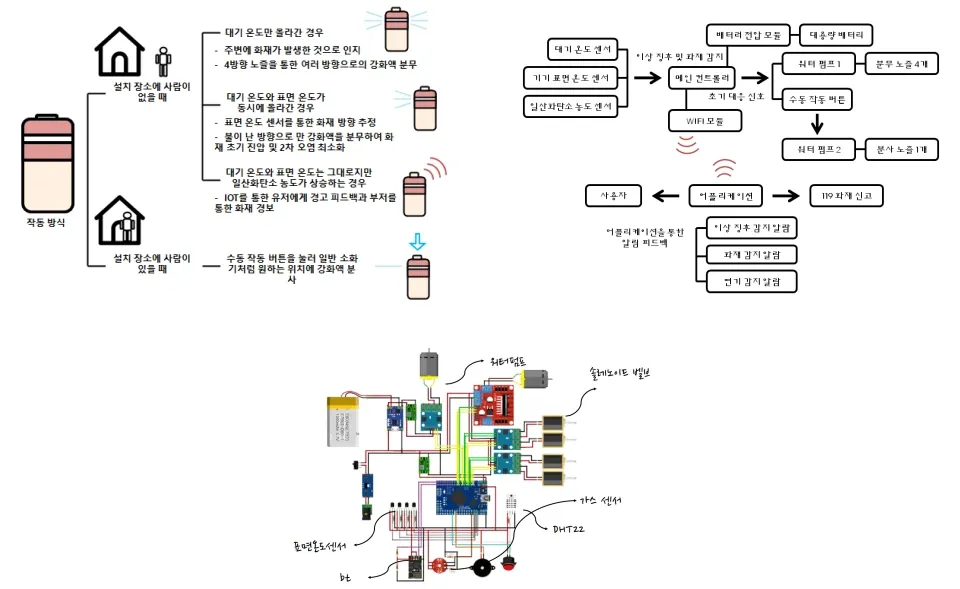
 Hardware Project
Building an Arduino Auto Fire Extinguisher: Flame, Smoke, Heat Sensing + IoT
KURUNG, an Arduino auto fire extinguisher entered in Sungkyunkwan University's 2021 Creative Capstone Design Competition. We built a low-cost IoT device that judges flame, smoke, and temperature sensors together to detect kitchen fires early, sprays extinguishing agent, and alerts a smartphone.
 Hardware Project
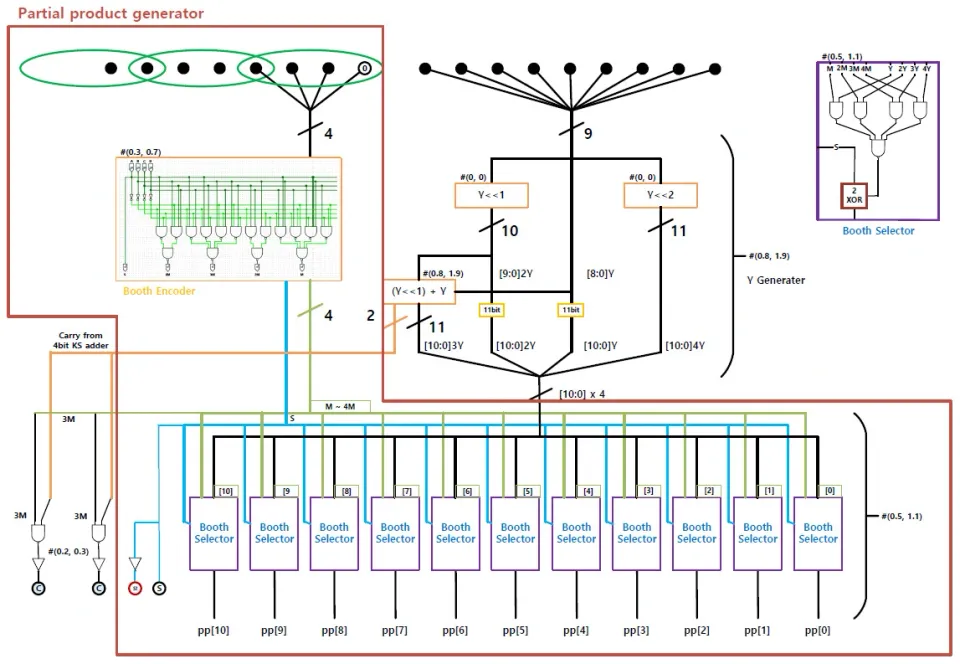
Radix-8 Booth Multiplier: Encoding Table and TDM Trade-offs (Verilog)
I designed a multiplier in Verilog that combines Radix-8 Booth encoding with TDM. This post covers how the Booth algorithm works, the number of partial products and hardware trade-offs at each radix, the Radix-8 encoding table, implementation and verification, and lessons learned.
 Hardware Project
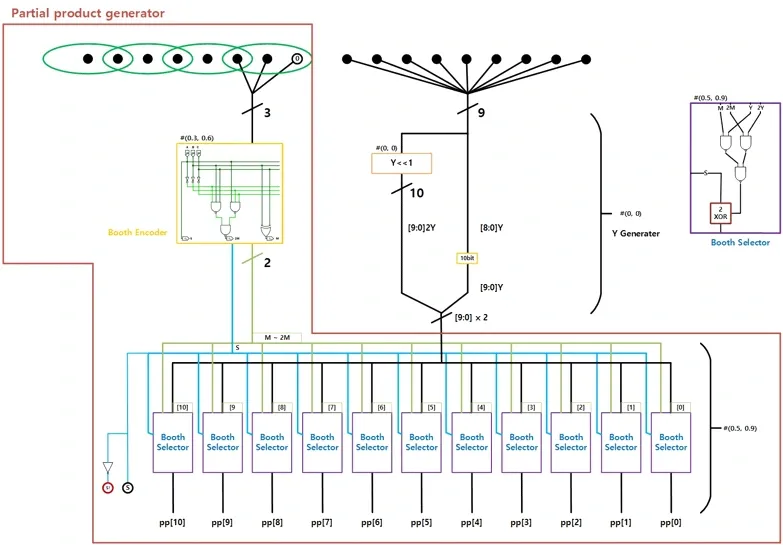
Radix-4 Booth Multiplier: Partial Product Reduction with TDM (Verilog)
I designed a radix-4 multiplier in Verilog that cuts the number of partial products with Booth encoding and compresses them with TDM. Covers the Booth encoder and selector, partial product generation, the carry save adder, the Kogge-Stone final adder, and the accuracy verification waveforms.
 Hardware Project
Cortex-M0 SoC Design: A Multifunction Robot Control System on AHB-Lite
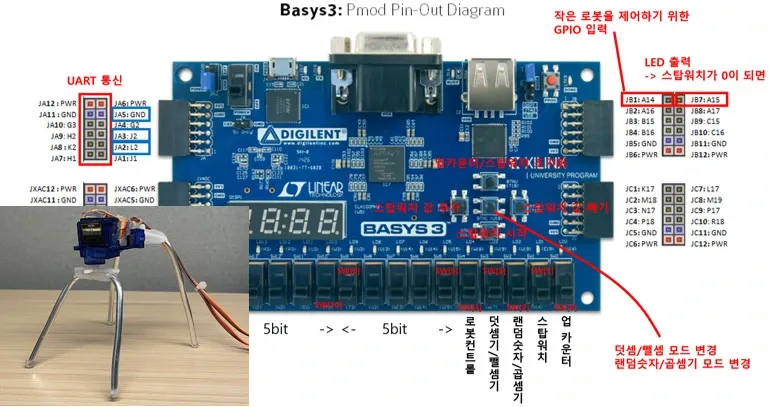
Designed an SoC on a Basys3 board that combines a Cortex-M0 with AHB-Lite peripherals. Covers the HW and SW of a multifunction system that controls a small robot over UART and runs an up counter, a stopwatch, a random number generator/multiplier, and an adder/subtractor, along with the results.
 Hardware Project
Differential Amplifier Design: 60 dB from a Mirror-Biased Two-Stage Amp
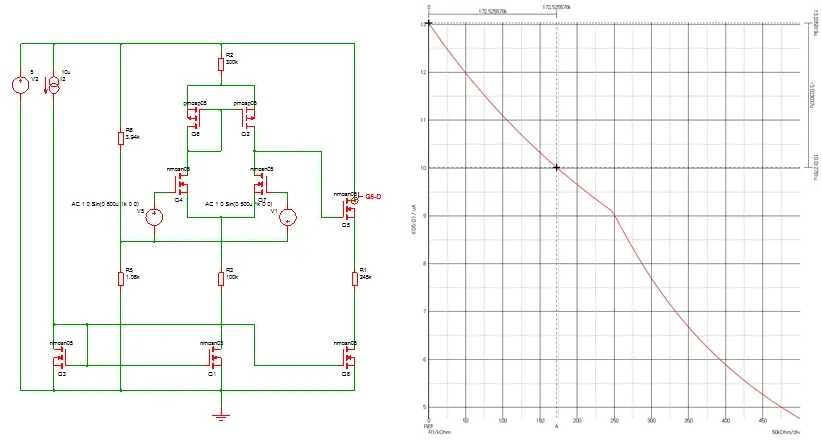
Designed a differential-input, single-ended-output amplifier with over 60 dB of gain in SIMetrix. The first stage is a differential amplifier biased with a current mirror and the second stage is a source-coupled amplifier, and I checked the output waveform for a 1 mV input at 5 V and 100 uA.
 Hardware Project
Designing a Verilog Slot Machine: LFSR Random Numbers and a Timer Seed (Basys3)
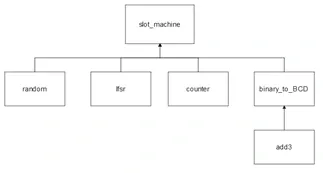
I designed a slot machine for the Basys3 board in Verilog. A timer seeds an LFSR to produce three BCD random numbers, and the output is 2x, 5x, or 10x the input depending on how many digits match. Covers the block diagram, sub-block definitions, simulation waveforms, and discussion.
 Hardware Project
Wallace Tree Multiplier in Verilog: 8-Bit Parallel Multiply with Adders
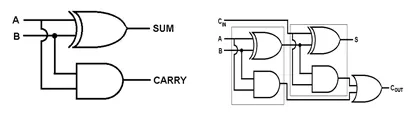
I designed an 8-bit parallel multiplier in Verilog using the Wallace tree structure, which reduces partial sums stage by stage with half adders and full adders. Covers the computation that produces the 16-bit product, the design flow, the testbench, and the full code.
 Hardware Project
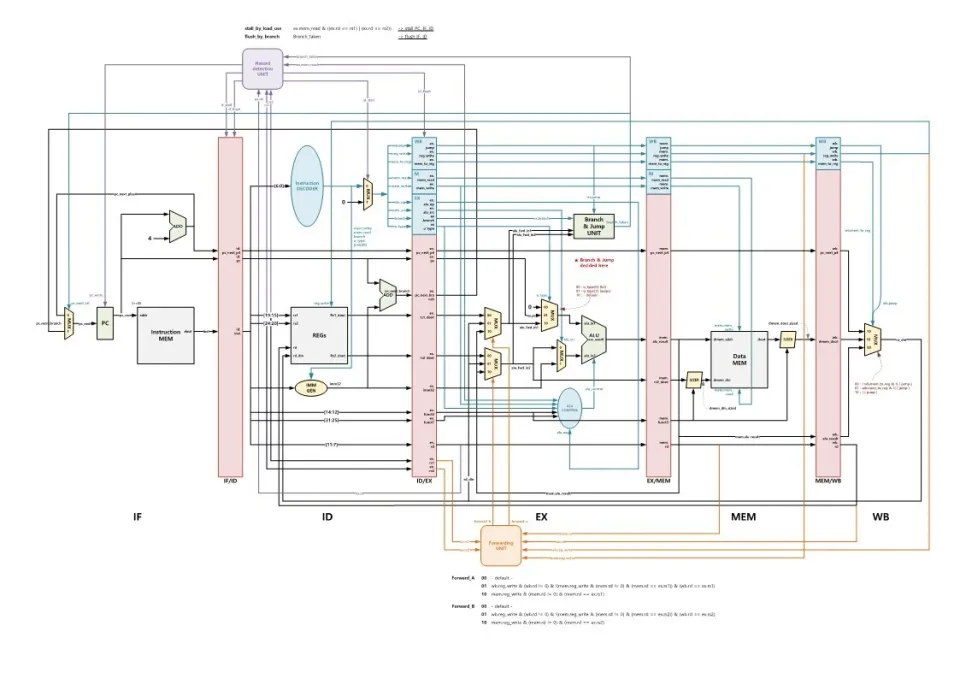
A 5-Stage Pipelined RISC-V Processor in Verilog: Hazards and Forwarding
I designed a 5-stage pipelined RISC-V processor in Verilog that supports the full RV32I instruction set. This post covers resolving data and control hazards with a hazard detection unit and a forwarding unit, and verifying the design with iverilog and GTKWave waveforms.
 Hardware Project
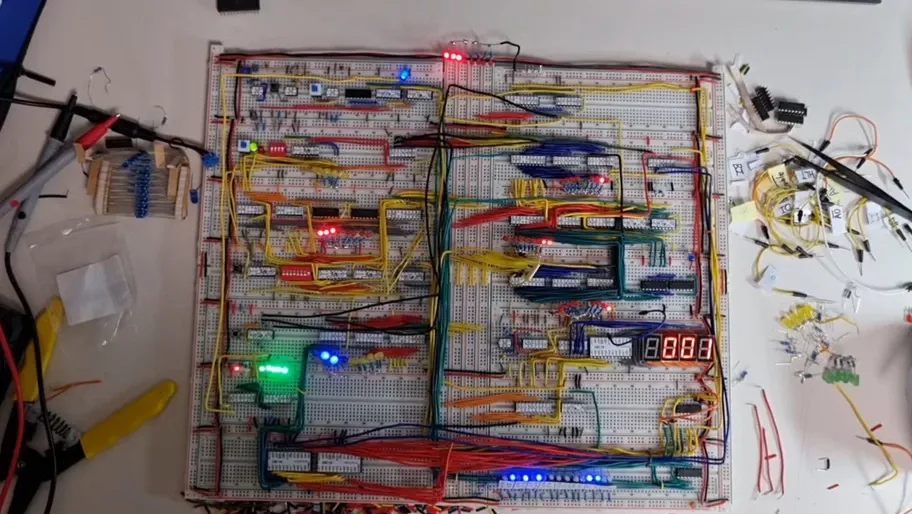
An 8-Bit Breadboard Computer Built from 74LS Chips: How a CPU Works
Following Ben Eater's design, I built an 8-bit computer on breadboards using only 74LS-series TTL chips. A record of learning the CPU's instruction execution cycle by wiring the clock, registers, ALU, RAM, program counter, and control unit by hand.
 Hardware Project
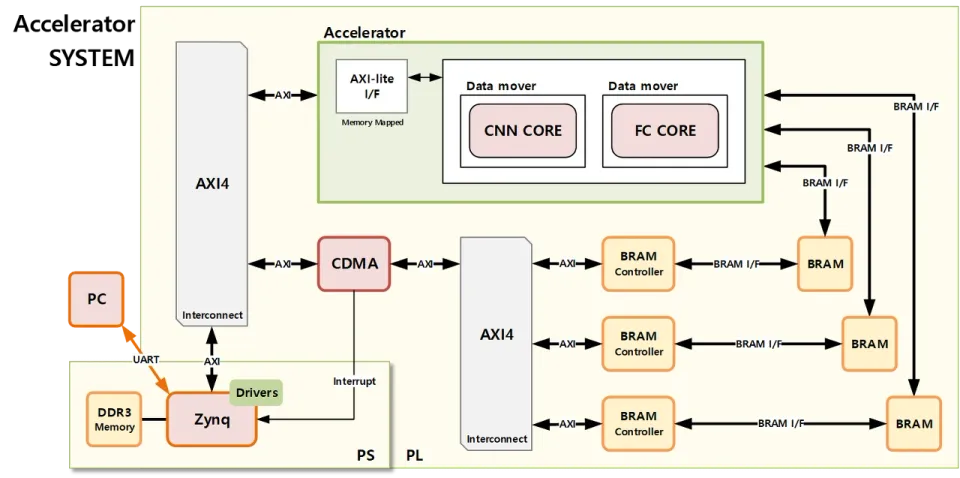
Zynq-7000 FPGA AI Accelerator: CNN/FC Cores and AXI CDMA Data Movement
I built an AI accelerator on a Zynq-7000 FPGA by designing CNN and fully connected compute cores and an AXI CDMA data mover. This post covers the Vivado and Vitis work: the design flow, the memory map, verifying the cores and movers, and building a 5-stage AI model.
 Hardware Project
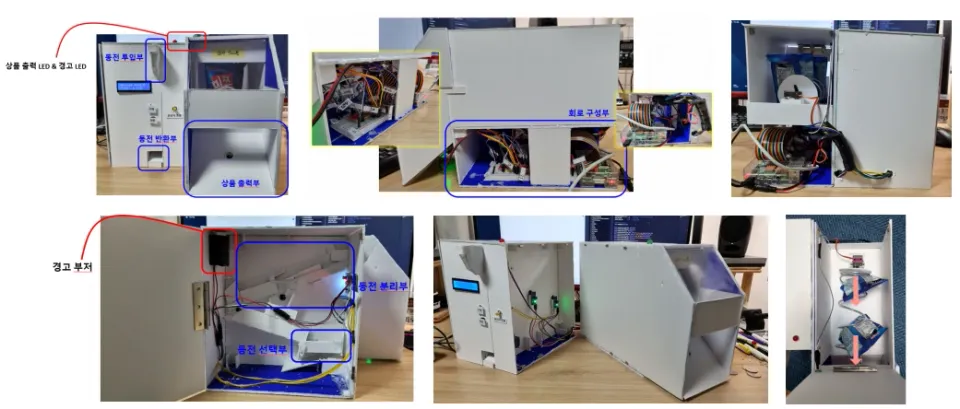
Building a Raspberry Pi IoT Vending Machine: Firebase Stock and Theft Alerts
An IoT vending machine project built with a Raspberry Pi. It manages stock and revenue remotely through a Firebase database and, when it detects theft, sounds a siren and alerts the operator. Covers the parts list, the hardware layout on each side, and the Python control code.
 Hardware Project
Kogge-Stone Adder in Verilog: Fewer Logic Levels with Higher-Valency Cells
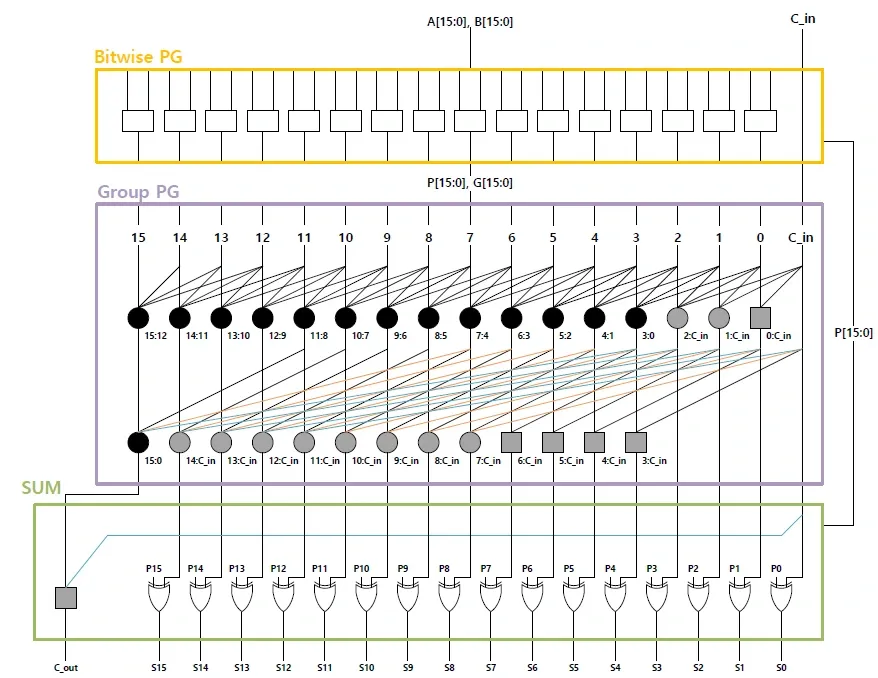
I designed a Kogge-Stone adder, the tree adder with the fewest logic levels, in Verilog using higher-valency cells. Covers the bitwise PG, group PG, and SUM logic code, testbench waveform verification, and the performance optimizations and analysis.